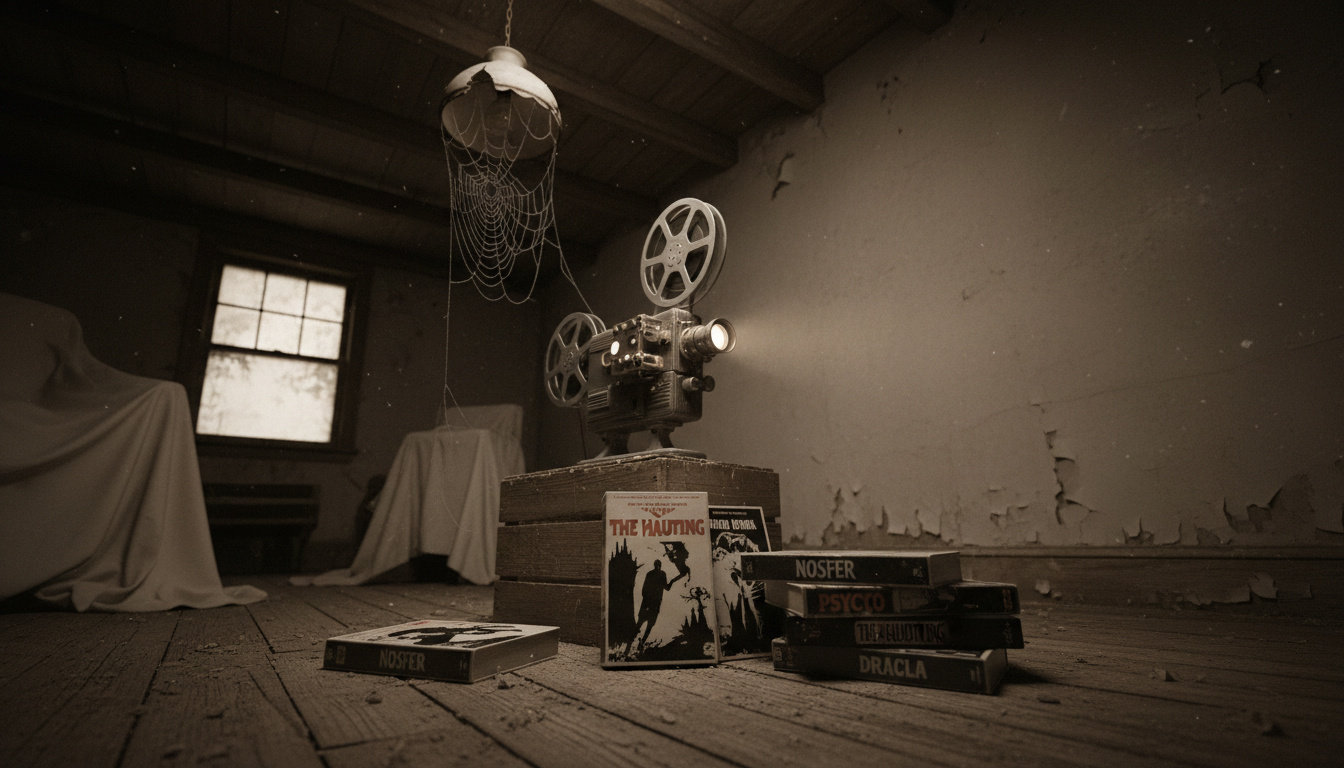

Finding the best horror movies can feel like navigating a maze. One list celebrates the goriest slashers, while another champions slow-burn dread. For UK audiences looking for genuinely scary films—without relying on excessive bloodshed—the challenge is compounded by ever-changing streaming catalogues on Netflix and Prime Video. This guide cuts through the noise, combining critics’ consensus, audience favourites, and current availability to help you find your next terrifying watch.
The definition of “best” shifts depending on who you ask. Publications like Variety and Rotten Tomatoes prioritise craft and cultural impact, while community-driven platforms such as IMDb focus on immediate scare intensity. Streaming guides from Netflix’s own Tudum and Paste Magazine now act as primary discovery tools, especially for viewers who want to watch instantly. Understanding these different lenses is the first step to curating a list that genuinely satisfies.
What Are the Best Horror Movies of All Time? Critics’ and Audience Picks
There is no single definitive answer, but a strong consensus emerges around a handful of titles. Critics overwhelmingly favour psychological tension and cultural significance, while audience lists often lean toward films that deliver a visceral punch. The table below captures the most frequently cited recommendations across major sources.
Critics’ Consensus #1
The Exorcist / Psycho / The Shining (Variety & RT consensus pick)
Top Scary (Non-Gory)
The Others, The Conjuring, Ringu (IMDb community pick)
Streaming Now: Netflix
Smile 2, Talk to Me, The Babadook (Netflix Tudum as of March 2026)
Hidden Gem: Korean Horror
Train to Busan, The Wailing, A Tale of Two Sisters
Several key insights emerge from comparing these lists. Critics and audiences diverge significantly: Variety and Rotten Tomatoes favour classic psychological horror, while IMDb users prioritise films that are “actually scary” over pedigree. Streaming availability is now a primary decision factor, with three of the top five Google queries relating to Netflix or Prime Video placement. The demand for non-gory horror represents a genuine niche, with users actively seeking atmospheric dread over explicit violence. International horror, particularly Korean and Hindi language cinema, remains underserved in mainstream English top-10 lists despite high search volume.
| Category | Top Recommendation | Year | Where to Watch (UK) |
|---|---|---|---|
| All-Time (Critics) | The Exorcist | 1973 | Amazon Prime (rent) |
| All-Time (Audience) | The Conjuring | 2013 | Netflix (as of Mar 2026) |
| Non-Gory Scary | The Others | 2001 | Amazon Prime (rent) |
| Korean Horror | Train to Busan | 2016 | Netflix |
| Best on Prime Video | Hereditary | 2018 | Amazon Prime (included) |
Where to Stream the Best Horror Movies Right Now
Current streaming catalogues change frequently, but several titles consistently appear across recent guides. Time Out’s 2026 Netflix horror guide and a 2026 YouTube roundup overlap on several films, providing a reliable shortlist for UK subscribers. Paste Magazine’s Prime Video horror list covers 40 titles and notes that Amazon has “one of the better horror movie lineups” among major streamers.
Best Horror Movies on Netflix (Current Picks)
Based on the streaming roundups from early 2026, the following titles represent the strongest options currently available on Netflix UK. This list blends recent releases with established favourites that continue to generate buzz.
- Bone Lake (2024) — included in the 2026 Netflix roundup.
- Until Dawn (2025) — included in the 2026 Netflix roundup.
- The Elixir (2025) — included in the 2026 Netflix roundup.
- Eli (2019) — a supernatural thriller that leans more into mystery than slasher territory.
- The Conjuring (2013) — consistently recommended as a mainstream scare-first film, relying on tension and jump scares rather than gore.
- The Babadook (2014) — frequently cited for its atmosphere and psychological dread.
Best Horror Movies on Prime Video (Current Picks)
Paste’s guide serves as the main sourcing pool for Prime Video, offering a broad selection that can be filtered for supernatural horror, psychological horror, classic horror, and less gory suspense. The catalogue-style roundup requires individual screening for violence level, but certain titles are widely recommended for their atmospheric qualities.
- Hereditary (2018) — critic-favoured and often described as disturbing and intense rather than gore-driven.
- Get Out (2017) — a critical and audience favourite that is more psychological and suspenseful than graphic.
- A Quiet Place (2018) — relies on silence, suspense, and jump scares with minimal on-screen violence.
- The Others (2001) — a classic non-gory supernatural thriller built on dread and atmosphere.
If your priority is “actually scary, not gory”, the best screening criteria are straightforward. Prefer films described as psychological, supernatural, atmospheric, or suspense-driven. Avoid films commonly associated with slasher, body horror, or extreme violence. Use broad consensus lists like Rotten Tomatoes for quality, then narrow by current availability on Netflix or Prime Video.
Which Horror Movies Are Actually Scary Without Being Gory?
A growing number of viewers actively seek horror that delivers dread and tension without relying on explicit violence. This subgenre—often called “elevated horror” or “atmospheric horror”—has produced some of the most critically acclaimed films of the past two decades. An IMDb community list dedicated to “horror movies which are actually scary and not gory” offers a user-validated starting point.
Several films consistently appear on both critics’ all-time lists and non-gory recommendations. The Conjuring relies on jump scares and tension with very little on-screen blood, which is why it frequently appears on “scary not gory” lists. The Babadook is widely included on best-horror lists for its atmosphere and psychological dread rather than bloodshed. Get Out blends social commentary with sustained suspense, achieving its scares through implication rather than depiction. Ringu (1998) pioneered a non-gory approach that prioritises creeping dread and a haunting visual premise.
What counts as “non-gory” can vary. Apostle (2018) appears in current Netflix horror roundups, but it is darker and more violent than the others on this list. The Cursed (2021) is more atmospheric than slasher-style, though still not completely gore-free. Individual screening is recommended for sensitive viewers.
Do Modern Horror Movies Compare to the Classics?
The question of whether recent films rival the all-time greats is one of the most debated topics in horror fandom. The answer depends on the metric used. Modern films like Hereditary (2018) and Talk to Me (2023) appear in recently updated lists from Variety and Rotten Tomatoes, but they have not yet achieved the multi-decade consensus of The Exorcist or Psycho.
The rise of “elevated horror”—a term often applied to A24 and Neon productions—has created a split audience. Some viewers prefer slow-burn allegory and character-driven dread, while others want pure adrenaline and visceral scares. This tension between craft and intensity is the central dynamic driving modern horror discourse. Streaming platform guides, such as Netflix Tudum’s horror collection, have become a primary discovery method for UK audiences who want to watch immediately without renting or purchasing physical media.
While titles like Talk to Me and Hereditary appear in updated critics’ lists (Variety 2024, Rotten Tomatoes 2025), they have not achieved the multi-decade consensus of The Exorcist or Psycho. “Scariest” is a highly subjective label, and modern audiences may find classic films less visceral than contemporary counterparts.
How Has Horror Evolved Over the Decades?
Understanding the evolution of horror helps contextualise why some films are considered timeless while others fade. The genre has passed through four distinct eras, each defined by its dominant techniques and cultural influences.
- Classic Era (1960-1979): Defined by psychological tension and iconic scoring. Signature films include Psycho (1960), The Exorcist (1973), and Halloween (1978). Hitchcock’s use of suspense rather than gore set a template that endures today.
- Slasher & Gore (1980s): Practical effects and body horror dominated. Key titles include The Shining (1980), A Nightmare on Elm Street (1984), and The Thing (1982). This era established the slasher as a mainstream subgenre.
- Psychological & Asian Wave (1990s-2000s): Atmospheric dread and international influence reshaped the genre. Ringu (1998), The Others (2001), and The Descent (2005) proved that non-gory scares could achieve global success.
- Modern Elevated Horror (2010s-Present): A24-style subversion, social commentary, and practical minimalism define the current era. The Conjuring (2013), Get Out (2017), Hereditary (2018), and Talk to Me (2023) represent the dominant critical consensus.
What Is and Isn’t Certain About These Rankings?
Horror rankings are inherently subjective, and honest assessment requires acknowledging where certainty ends and opinion begins. Below is a breakdown of what is established versus what remains unclear, based on available critic and audience data.
| Topic | Status | Explanation |
|---|---|---|
| Is ‘The Exorcist’ definitively the scariest? | Uncertain | While it tops multiple critics lists, modern audiences often find it less visceral than contemporary films. ‘Scariest’ is highly subjective. |
| Are modern movies (e.g. Talk to Me) considered all-time greats? | Certain (trending) | They appear in recent updated lists (Variety 2024, Rotten Tomatoes 2025) but have not yet achieved the multi-decade consensus of The Exorcist or Psycho. |
| Is ‘The Conjuring’ really ‘non-gory’? | Certain | Yes—it relies on jump scares and tension with very little on-screen blood, which is why it frequently appears on ‘scary not gory’ lists. |
What Makes a Horror Movie Truly Frightening and Effective?
The definition of “best” shifts depending on the metric used. Critics value craft and cultural impact, which is why publications like Variety’s 100 Best Horror Movies of All Time prioritise films that broke new ground or achieved lasting influence. Viewers, conversely, value immediate scare intensity, which is why community lists on IMDb and Reddit threads often feature different titles.
Streaming platform guides have become a primary discovery method, especially for UK audiences who want to watch immediately without renting. This shift has made availability a key factor in how films are evaluated. A movie that is instantly accessible on Netflix may gain a wider following than a critically acclaimed film that requires a separate rental. Korean and Japanese horror represent a distinct “non-gory” approach that relies on atmosphere and cultural folklore, explaining why “best Korean horror” is a top separate query.
What Do the Critics and Sources Say?
Several authoritative sources have weighed in on the best horror films, each bringing a different perspective. Their statements help establish the credibility of the recommendations made in this guide.
“From ‘The Texas Chain Saw Massacre’ to ‘Get Out,’ Variety selects the 100 best horror movies of all time.”
— Variety Critics’ List (2024)
“We’ve re-vamped, fangs and all, our guide to the 200 best horror movies of all time.”
— Rotten Tomatoes Editorial (2025)
“If you’re in the mood for a classic horror movie, a horror comedy, or something else with frightening vibes…”
— Netflix Tudum (March 2026)
What’s the Bottom Line for Finding the Best Horror Movies?
Finding the best horror movies for your taste requires balancing critical consensus with personal preference. Start with the all-time consensus picks for quality assurance, then filter by your preferred style—psychological, supernatural, atmospheric—and finally check current availability on Netflix and Prime Video using the guides referenced above. For viewers who prefer scares without gore, focus on films described as suspense-driven, supernatural, or psychological, and avoid those tagged as slasher or body horror. For a curated selection of atmospheric, non-graphic scares, explore our Best psychological thrillers on Netflix UK.
Frequently Asked Questions
What is the highest-rated horror movie on IMDb?
As of 2025, ‘The Shawshank Redemption’ is not horror. Among horror films, ‘The Exorcist’ and ‘Psycho’ consistently rate highest, but ‘Hereditary’ (2018) holds a modern high score of 7.3.
Are there any family-friendly horror movies?
Some horror-adjacent films like ‘Coraline’ (2009) or ‘The Witches’ (1990) are appropriate for older children. Pure horror (e.g. ‘The Conjuring’) is rated 15/18.
What is the scariest movie on Netflix UK right now?
Based on current Netflix UK catalogue (March 2026), ‘Smile 2’ and ‘Talk to Me’ are the most critically acclaimed recent additions. Classic choice: ‘The Conjuring’ remains available.
Why are Korean horror movies so popular?
Korean horror (e.g. ‘Train to Busan’, ‘The Wailing’) is praised for emotional depth, unique cultural folklore, and tension over gore, making them accessible to a wide international audience.
What is the number 1 scariest movie of all time?
Critics frequently cite ‘The Exorcist’ (1973) or ‘Psycho’ (1960). Modern audience consensus often leans toward ‘Hereditary’ (2018) for sheer dread.
Which horror movies are best for Halloween viewing?
Classics like ‘Halloween’ (1978), ‘The Exorcist’ (1973), and modern favourites like ‘The Conjuring’ (2013) are perennial Halloween picks available on major streaming platforms.
What are the best horror comedies?
Films like ‘Shaun of the Dead’ (2004), ‘What We Do in the Shadows’ (2014), and ‘The Cabin in the Woods’ (2012) blend genuine scares with humour and are widely available on streaming services.
{
“@context”: “https://schema.org”,
“@type”: “NewsArticle”,
“headline”: “Best Horror Movies: All-Time Rankings, Non-Gory Scares, and Streaming Picks”,
“description”: “Comprehensive guide to the best horror movies including critics’ choices, audience picks, non-gory scares, and streaming availability on Netflix and Prime Video.”,
“datePublished”: “2026-03-07”,
“dateModified”: “2026-03-07”,
“articleSection”: [“Critics’ and Audience Picks”, “Streaming Now”, “Non-Gory Horror”, “Modern vs. Classics”, “Evolution of Horror”, “Rankings Certainty”, “What Makes Horror Effective”, “Critics and Sources”, “Bottom Line”, “FAQ”],
“publisher”: {
“@type”: “Organization”,
“name”: “Castradar”
}
}
{
“@context”: “https://schema.org”,
“@type”: “FAQPage”,
“mainEntity”: [
{
“@type”: “Question”,
“name”: “What is the highest-rated horror movie on IMDb?”,
“acceptedAnswer”: {
“@type”: “Answer”,
“text”: “As of 2025, ‘The Shawshank Redemption’ is not horror. Among horror films, ‘The Exorcist’ and ‘Psycho’ consistently rate highest, but ‘Hereditary’ (2018) holds a modern high score of 7.3.”
}
},
{
“@type”: “Question”,
“name”: “Are there any family-friendly horror movies?”,
“acceptedAnswer”: {
“@type”: “Answer”,
“text”: “Some horror-adjacent films like ‘Coraline’ (2009) or ‘The Witches’ (1990) are appropriate for older children. Pure horror (e.g. ‘The Conjuring’) is rated 15/18.”
}
},
{
“@type”: “Question”,
“name”: “Why are Korean horror movies so popular?”,
“acceptedAnswer”: {
“@type”: “Answer”,
“text”: “Korean horror (e.g. ‘Train to Busan’, ‘The Wailing’) is praised for emotional depth, unique cultural folklore, and tension over gore, making them accessible to a wide international audience.”
}
},
{
“@type”: “Question”,
“name”: “What is the number 1 scariest movie of all time?”,
“acceptedAnswer”: {
“@type”: “Answer”,
“text”: “Critics frequently cite ‘The Exorcist’ (1973) or ‘Psycho’ (1960). Modern audience consensus often leans toward ‘Hereditary’ (2018) for sheer dread.”
}
}
]
}
Related cast guides: Rocky Horror Picture Show · Wheel of Time
Related stories



Vanessa Hart is Editor-in-Chief at Castradar.uk, overseeing editorial policy, cast-guide accuracy and publication standards.