The Ensemble That Defined Modern Christmas Cinema
When Richard Curtis assembled the cast for Love Actually in 2003, he created more than a holiday romantic comedy. The film interconnects ten separate stories of love and heartbreak during the Christmas season, propelled by a roster that blends established British icons with emerging Hollywood talent. The film’s IMDb entry documents an extraordinary gathering of future Oscar winners, BAFTA recipients, and actors who would define the decade’s mainstream cinema.
The Cast Grid
The principal ensemble spans multiple generations of British and American performers. At the center stands Hugh Grant as the recently elected Prime Minister, navigating both political pressures and romantic entanglements with his household staff. Emma Thompson and Alan Rickman portray a marriage strained by infidelity, while Liam Neeson anchors the narrative as a grieving widower guiding his young son through first love.
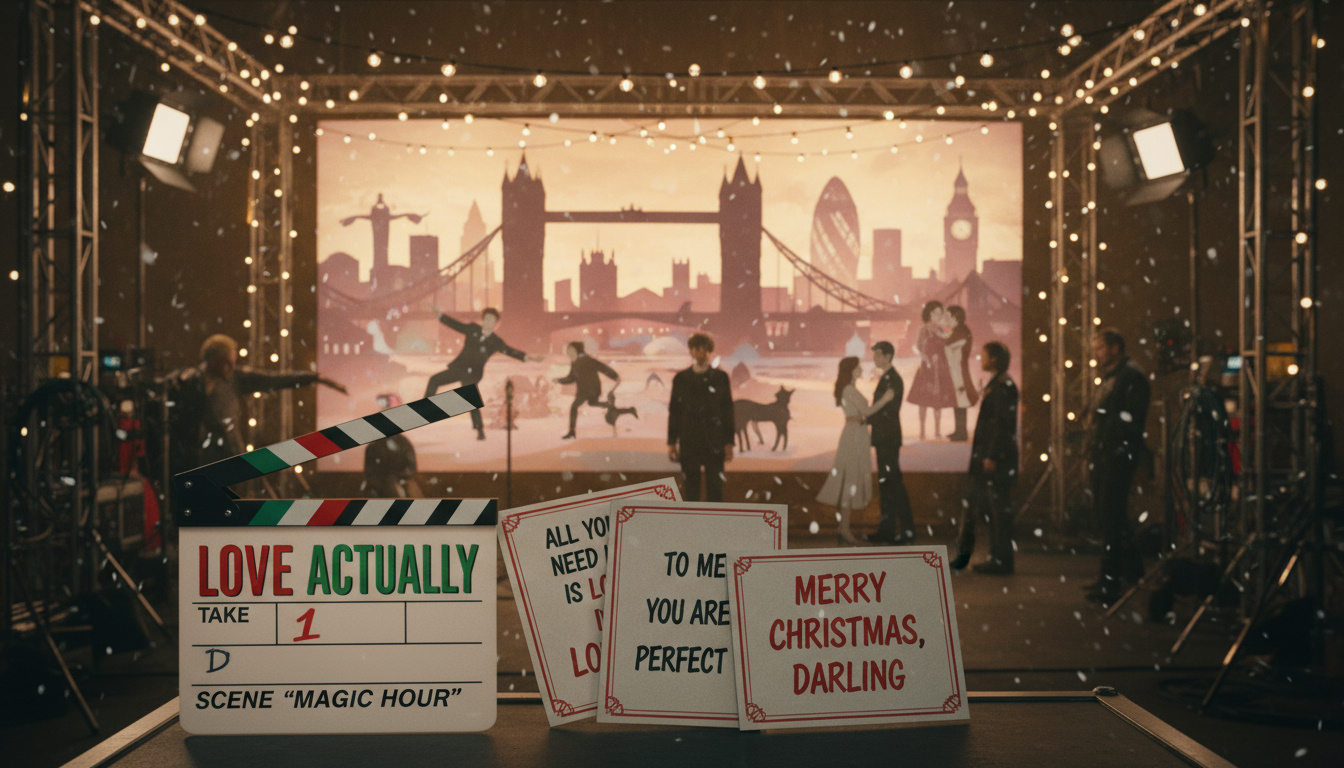
Keira Knightley appears as Juliet, caught in an unrequited love triangle, with Andrew Lincoln as Mark, whose cue-card declaration became the film’s most referenced scene. Bill Nighy delivers a scene-stealing turn as aging rock star Billy Mack, promoting a Christmas comeback single. Colin Firth plays Jamie, a novelist recovering from betrayal in France, alongside Lúcia Moniz as his Portuguese housekeeper Aurelia. The London storyline features Laura Linney as Sarah, whose office romance with Karl conflicts with family obligations, while Martin Freeman and Joanna Page portray body doubles who develop intimacy during film shoots.
Production Insights
Several casting decisions emerged from existing professional relationships. Curtis wrote Thompson’s role specifically for her, incorporating personal elements into the famous necklace scene. Grant noted in BBC interviews that his dancing sequence through Number 10 Downing Street was added after principal photography began, requiring the actor to overcome significant reluctance.
Nighy initially hesitated accepting the role of Billy Mack, concerned about playing an aging rock star. The character of Sam, played by Thomas Sangster, was written specifically for the young actor after Curtis saw his audition. Olivia Olson, who portrays Joanna, impressed the production with her vocal performance of “All I Want for Christmas Is You,” leading to extended recording sessions.
Cast Overview
| Actor | Character | Notable For |
|---|---|---|
| Hugh Grant | Prime Minister | Improvised dance sequence |
| Emma Thompson | Karen | Emotional jewelry scene |
| Alan Rickman | Harry | Conflicted office executive |
| Keira Knightley | Juliet | Wedding video subplot |
| Liam Neeson | Daniel | Stepfather-son relationship |
| Bill Nighy | Billy Mack | Christmas single comeback |
| Colin Firth | Jamie | Language barrier romance |
| Laura Linney | Sarah | Office romance complications |
Wikipedia’s comprehensive entry documents additional cast members including Rowan Atkinson’s expanded cameo and the late Kris Marshall’s memorable storyline involving Wisconsin.
Performance Details
Emma Thompson’s portrayal of Karen required particular nuance. The scene where she discovers Harry’s infidelity through a Christmas gift demonstrates Thompson’s ability to convey devastation through restrained physicality rather than dialogue. She reportedly completed the take in one shot.
Grant’s return to romantic leads after a career shift came with specific conditions. He and Curtis developed the Prime Minister as less bumbling than previous Grant protagonists, emphasizing authority while retaining signature charm. The actor performed his own dance moves throughout the Downing Street sequence, filmed over two days with limited rehearsal.
Nighy’s Billy Mack required extensive collaboration with Curtis. The character’s weathered authenticity stemmed from Nighy’s research into British rock history from the 1960s and 1970s. His radio interview scenes were largely improvised, creating the spontaneous comedic tone that earned particular audience affection.
Entertainment Weekly’s oral history reveals that Lincoln’s cue-card scene was filmed in a single day on location in London, with the actor performing the silent declaration in freezing temperatures.
Production Timeline
Principal photography commenced in September 2002 across London, Surrey, and France. The ensemble structure required complex scheduling to accommodate the A-list cast’s competing commitments. Grant filmed his parliamentary scenes during breaks from other projects, while Thompson and Rickman shot their marital storyline in concentrated blocks.
The Heathrow Airport opening and closing sequences bookend the production schedule. Curtis utilized hidden cameras to capture genuine reunion footage at arrivals terminals, interspersed with principal photography throughout November 2002. Post-production concluded in October 2003, with the film premiering at the Toronto International Film Festival before its UK theatrical release on November 21, 2003.
Clarifications
Several misconceptions persist regarding the cast and characters. Thomas Sangster, who portrayed Sam, was actually thirteen during filming despite playing a character seemingly younger, creating an authentic age-appropriate dynamic with Olivia Olson. The relationship between the Prime Minister and Natalie was never intended as commentary on specific political figures, though Curtis acknowledged drawing inspiration from the then-current administration.
The funeral that opens Daniel’s storyline was not filmed with a full church congregation; Neeson performed the eulogy to empty pews with inserts added later. Additionally, the actors portraying Jamie and Aurelia did not share a language during their courtship scenes—Firth learned his Portuguese phonetically while Moniz performed in her native tongue, creating genuine communication barriers that enhanced the performances.
Critical Analysis
Retrospective assessment recognizes the cast’s chemistry as the primary driver of the film’s enduring popularity. The Guardian’s contemporary review noted the difficulty of balancing ten narrative arcs, yet praised the cast for preventing the structure from collapsing into incoherence. Thompson’s performance received universal acclaim, with several critics citing her terminal scene as the film’s emotional anchor.
The ensemble approach influenced subsequent holiday films, though few have replicated the specific alchemy of Curtis’s cast. Nighy’s Billy Mack became a cultural touchstone for aging rock stars, while Grant’s dancing Prime Minister generated renewed interest in the actor’s physical comedy capabilities. The film’s success cemented several cast members’ transitions between independent British cinema and mainstream Hollywood productions.
From the Cast
I kept saying to Richard, ‘Are you sure you want me to do this?’ and he kept saying yes. I suppose I was the right age to be properly embarrassed about everything.
— Hugh Grant on filming the dance sequence
That scene was based on something that happened to my sister. The betrayal, the necklace, all of it. So when Emma did it, I was watching my sister’s heartbreak on screen.
— Richard Curtis on Thompson’s jewelry scene
We were all aware we were making something that might be sentimental, but the cast kept it grounded. There was real tenderness between us all.
— Liam Neeson on ensemble dynamics
Variety’s 20th-anniversary coverage collected additional reflections from surviving cast members regarding the film’s legacy.
Summary
The Love Actually cast represents a specific moment in early-2000s cinema when British talent commanded both critical prestige and commercial viability simultaneously. From Grant’s redefined romantic lead to Thompson’s devastating naturalism and Nighy’s scene-stealing comedy, each performance contributes to the film’s remarkable durability. As annual holiday viewings continue introducing the ensemble to new generations, the cast remains intrinsically linked to contemporary Christmas cultural identity.
Frequently Asked Questions
Which cast member improvised the most during filming?
Bill Nighy and Hugh Grant contributed significantly to their scenes through improvisation. Nighy’s radio booth dialogue was largely unscripted, while Grant developed his dance sequence through collaboration with the choreographer, though the final cut mixed planned movements with spontaneous choices.
Did Emma Thompson and Alan Rickman have difficulty filming their confrontational scenes?
Despite the emotional intensity of their storyline, Thompson and Rickman were close friends outside production. Thompson later described relying on that friendship to access the necessary vulnerability for their difficult scenes together.
How did the cast prepare for the Heathrow finale?
The airport conclusion utilized a combination of hidden camera footage and staged arrivals. Principal cast members filmed their reunion scenes separately over several days, with the editing team compiling the sequences to create the illusion of simultaneous arrivals.
What happened to the characters played by Kris Marshall and Abdul Salis?
While the film concludes with most character arcs resolved, the Wisconsin storyline featuring Colin and Tony ends with their romantic success in America. Extended cuts and DVD commentary confirm that these characters remained in the United States following the events depicted.
{
“@context”: “https://schema.org”,
“@type”: “NewsArticle”,
“headline”: “love actually cast”,
“datePublished”: “2024-01-15T09:00:00+00:00”,
“dateModified”: “2024-01-15T09:00:00+00:00”,
“articleSection”: [“The Ensemble That Defined Modern Christmas Cinema”, “The Cast Grid”, “Production Insights”, “Cast Overview”, “Performance Details”, “Production Timeline”, “Clarifications”, “Critical Analysis”, “From the Cast”, “Summary”, “FAQ”],
“publisher”: {
“@type”: “Organization”,
“name”: “Cast Radar”,
“url”: “https://castradar.uk/”
}
}
{
“@context”: “https://schema.org”,
“@type”: “FAQPage”,
“mainEntity”: [
{
“@type”: “Question”,
“name”: “Which cast member improvised the most during filming?”,
“acceptedAnswer”: {
“@type”: “Answer”,
“text”: “Bill Nighy and Hugh Grant contributed significantly to their scenes through improvisation. Nighy’s radio booth dialogue was largely unscripted, while Grant developed his dance sequence through collaboration with the choreographer, though the final cut mixed planned movements with spontaneous choices.”
}
},
{
“@type”: “Question”,
“name”: “Did Emma Thompson and Alan Rickman have difficulty filming their confrontational scenes?”,
“acceptedAnswer”: {
“@type”: “Answer”,
“text”: “Despite the emotional intensity of their storyline, Thompson and Rickman were close friends outside production. Thompson later described relying on that friendship to access the necessary vulnerability for their difficult scenes together.”
}
},
{
“@type”: “Question”,
“name”: “How did the cast prepare for the Heathrow finale?”,
“acceptedAnswer”: {
“@type”: “Answer”,
“text”: “The airport conclusion utilized a combination of hidden camera footage and staged arrivals. Principal cast members filmed their reunion scenes separately over several days, with the editing team compiling the sequences to create the illusion of simultaneous arrivals.”
}
},
{
“@type”: “Question”,
“name”: “What happened to the characters played by Kris Marshall and Abdul Salis?”,
“acceptedAnswer”: {
“@type”: “Answer”,
“text”: “While the film concludes with most character arcs resolved, the Wisconsin storyline featuring Colin and Tony ends with their romantic success in America. Extended cuts and DVD commentary confirm that these characters remained in the United States following the events depicted.”
}
}
]
}
Related cast guides: Love Hate · Love Is Blind
Related stories





Leon Carter covers cinema releases, movie cast guides and filmographies.