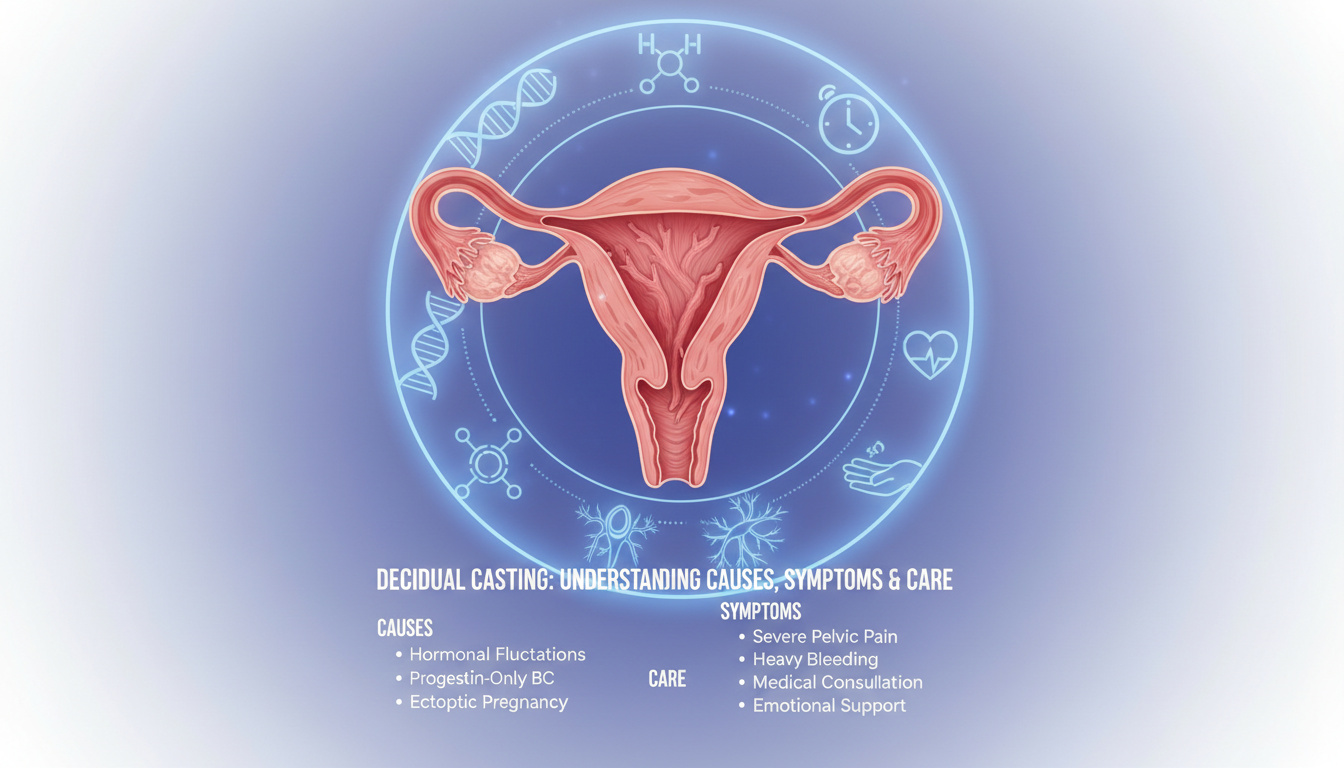
A decidual cast is a rare clinical phenomenon involving the shedding of the uterine lining in one intact piece. The condition is often mistaken for a miscarriage, but its unique biological process sets it apart from other menstrual or pregnancy-related events. Understanding the signs, causes, and management strategies can be crucial for those who experience this event.
While most menstruations pass blood and tissue in fragments, a decidual cast presents as a large, fleshy or clot-like structure, often several inches long. This event typically follows a sudden hormonal shift and can cause intense pain before resolving on its own. Recognising when medical assessment is needed is essential, especially due to the potential for similar presentations during pregnancy complications or contraceptive use.
What is a decidual cast and how does it form?
| Definition | Causes | Symptoms | Treatment |
|---|---|---|---|
| Shedding of the endometrial decidua in one piece | Hormonal shifts or withdrawal | Intense pain, heavy bleeding | Observation or medical care |
| Risk Factors | When to Seek Help | Impact on Fertility | Prevention |
| Contraceptive use, uterine abnormalities | Ongoing bleeding, infection signs | Minimal in most cases | Unreliable due to hormonal unpredictability |
- The decidual cast occurs when the uterine lining is expelled whole, not fragmented.
- Sharp hormonal changes, especially drops in progesterone, commonly trigger the event.
- People using hormonal contraceptives are at increased risk.
- Intense abdominal pain and bleeding may lead to confusion with miscarriage.
- Treatment is often supportive, but medical review is recommended where pregnancy complications are possible.
- Most cases resolve with no long-term health effects.
- Underlying hormone imbalances or structural issues may need further assessment.
| Key Facts about Decidual Casts | |
|---|---|
| Definition | A shedding of the decidual lining, often observed post-pregnancy. |
| Occurrence | Relatively rare; requires medical evaluation when observed. |
| Risk Factors | Hormonal imbalances, uterine abnormalities, history of miscarriage. |
| Treatment | Observation, medical intervention, and follow-up care. |
What are the signs, symptoms, and risks associated with a decidual cast?
How does a decidual cast present and how can one identify it?
Most who experience a decidual cast report sudden, severe abdominal cramps, often exceeding the intensity of usual menstrual pain. Tissue passed can be large, rubbery, and roughly shaped like the uterine cavity. Heavy bleeding may accompany the event, sometimes with nausea or vomiting. The passage of this cast may be confused with pregnancy tissue, but it commonly occurs independently of pregnancy.
A decidual cast can mimic a miscarriage by presenting with intense pain, heavy bleeding, and the expulsion of tissue. However, a positive pregnancy test is generally absent in decidual cast cases, while it is expected in miscarriage scenarios. Source
Associated Symptoms and Overlapping Conditions
Symptoms such as fever, foul-smelling discharge, or dizziness indicate complications like infection or anaemia. Conditions like large menstrual clots, cervical polyps, or foreign bodies can also cause tissue passage but differ in origin and appearance. Ectopic pregnancy remains the most concerning mimic, requiring prompt exclusion through clinical assessment.
Risks During Pregnancy and Potential Complications
Decidual casts are typically intermittent and benign in non-pregnant individuals. During pregnancy, an abnormal decidualisation process may be associated with miscarriage risk, preeclampsia, or premature birth, particularly if placentation is compromised. Serious complications are rare, but retention of tissue can promote infection or chronic pelvic pain if untreated.
What treatment options and management strategies exist?
How is a decidual cast treated?
Treatment most often involves waiting for the cast to pass naturally. Pain relief, such as over-the-counter medication, offers comfort during the event. Infection is rare but demands antibiotics if present. For confirmed ectopic pregnancies, prompt medical interventions such as methotrexate may be required. Recurrence of decidual cast is uncommon.
Medical advice should be sought if there is ongoing heavy bleeding (over one pad per hour for more than two hours), fever, or dizziness. These may signal complications such as infection or excessive blood loss. Source
When to seek clinical evaluation
Persistent or atypical symptoms always warrant professional review. A pregnancy test is recommended to rule out ectopic pregnancy or miscarriage in disguise. When doubt exists over the tissue’s nature, medical assessment is the safest path, especially where recent pregnancy or contraceptive changes have occurred.
More in-depth information on relevant reproductive health topics can be found through the NHS – Pregnancy Health and the Royal College of Obstetricians and Gynaecologists.
For character-based insights into parenting, the Cast Of Parenthood – In-Depth Family Casting Breakdown offers a cultural perspective alongside clinical discussions.
How does a decidual cast affect future fertility and what preventive measures can be taken?
Impact on fertility and cycle health
After an isolated decidual cast, menstrual cycles typically return to normal. No persistent effects on fertility have been documented in the majority of cases. However, underlying hormonal disorders or anatomical uterine issues may compromise long-term reproductive health, making further evaluation advisable if events repeat.
There is no established method to reliably prevent decidual casts, as unpredictable hormonal changes play a primary role in their development. Addressing risk factors such as contraceptive-induced hormone fluctuations may be discussed with a healthcare provider if recurrent episodes occur. Source
Advice for those with recurrent or complex presentations
Anyone with repeated decidual casts should discuss the possibility of switching contraceptive methods or investigating for underlying anatomical or hormonal causes. In-depth hormonal analysis or referral to an obstetrician-gynaecologist may be indicated. Fertility planning is generally unaffected, but exclusion of other gynaecological conditions is prudent.
Further reading on cinematic explorations of fate and consequence can be found in the Cast Of Final Destination Bloodlines resource.
What is the typical timeline and progression during a decidual cast?
- Progesterone levels fall during the late phase of the menstrual cycle or after contraceptive changes (source).
- Within hours to days, the endometrial lining detaches as a whole piece, leading to severe cramps and sudden bleeding.
- Expulsion of the cast may occur within a few hours after symptom onset, with pain peaking as tissue passes.
- Most symptoms subside rapidly post-expulsion.
- Medical evaluation is often sought for reassurance or if symptoms do not abate.
- Follow-up is recommended only if signs of complication (infection, persistent bleeding, or abdominal pain) develop.
What aspects of decidual cast formation are well-understood, and where does uncertainty remain?
| Established Knowledge | Areas of Uncertainty |
|---|---|
| The typical appearance and single-piece nature of decidual casts are clinically well-documented. | Full understanding of the hormonal triggers and why only a minority experience this event remains incomplete. |
| Most episodes are linked to hormonal contraception or sudden hormone changes. | The connection between decidual casts and future fertility complications is not well established. |
| Most casts are benign and self-limited. | Prevention guidelines are inconclusive due to unpredictable hormonal fluctuations. |
| Comparison with miscarriage is supported by clinical evidence. | Differentiation from rare pregnancy-related complications can remain clinically challenging. |
Why does the uterine lining sometimes expel in a decidual cast: clinical background
The uterine lining, or endometrium, undergoes decidualisation when exposed to progesterone after ovulation or in early pregnancy. This transformation allows for embryo implantation and supports placental formation. When hormonal support rapidly withdraws or fails, as in certain contraceptive protocols or pregnancy complications, the entire lining may detach as a cast instead of breaking up gradually. Although most cases are short-lived, improper decidualisation is associated with specific pregnancy complications, including preeclampsia and miscarriage. Ongoing clinical research aims to clarify long-term implications and stratify risk in those with recurrent events.
Where do leading expert sources and guidelines stand?
The Royal College of Obstetricians and Gynaecologists emphasises the importance of ruling out pregnancy complications when tissue passage or abnormal bleeding occur. Early consultation is especially advised in those with a history of pregnancy or contraceptive changes.
Royal College of Obstetricians and Gynaecologists
Official NHS guidelines highlight that heavy or unusual bleeding is not uncommon with contraceptive use, but the appearance of cast-like tissue should prompt medical evaluation to exclude other causes.
NHS – Pregnancy Health
“The phenomenon of decidual cast is rare and often causes considerable distress due to its similarity to miscarriage. Most cases resolve without sequelae,” state researchers in a review published on PubMed.
PubMed – Medical Research
What should be taken away from the current understanding of decidual casts?
A decidual cast is an infrequent but often alarming gynaecological event, generally resulting from sudden hormonal withdrawal. Its dramatic symptoms are rarely dangerous but do warrant clinical exclusion of pregnancy complications. For trusted guidance on complex health conditions and symptom variation, ongoing reference to sources such as the NHS or RCOG is essential.
Frequently asked questions about decidual casts
What distinguishes a decidual cast from a miscarriage?
Is the appearance of a decidual cast always a cause for concern?
How long does it typically take for recovery after experiencing a decidual cast?
Can lifestyle changes help prevent the occurrence of decidual casts?
Are there any specific tests used to diagnose a decidual cast?

Isabelle Knight covers television series, streaming platforms and TV cast guides for UK viewers.