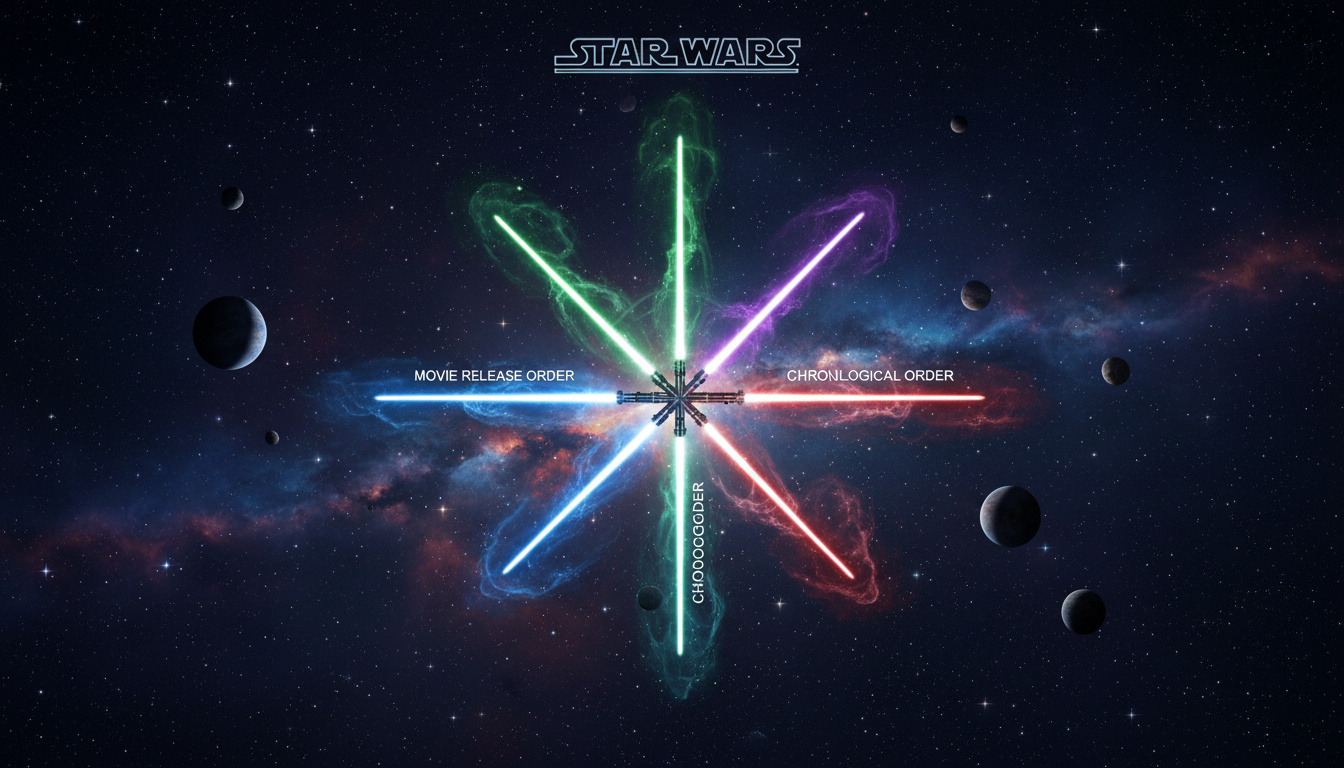
Navigating the Star Wars cinematic universe requires clarity on two distinct approaches: the order in which films arrived in cinemas, and the chronological sequence of events within the galaxy far, far away. Since 1977, the franchise has expanded beyond the original trilogy to encompass prequels, sequels, and standalone anthology stories, creating multiple valid pathways for viewers.
This guide examines all twelve theatrically released films, distinguishing between live-action epics and the animated feature that bridges television narratives. With confirmed theatrical releases scheduled through 2027, understanding the current canon and its historical development remains essential for both new audiences and returning fans.
Star Wars Movies in Order: Release and Chronological
12 films (11 live-action features plus one animated theatrical release)
Original Trilogy, Prequel Trilogy, Sequel Trilogy, and Anthology Films
(Star Wars: Episode IV – A New Hope)
(Star Wars: Episode IX – The Rise of Skywalker)
According to Space.com, two primary sequencing methods dominate viewer discussion. Release order preserves the original narrative reveals and technological progression, whilst chronological order follows the in-universe timeline from the prequel era through the sequel trilogy.
Key distinctions between these approaches include:
- The Empire Strikes Back (1980) consistently ranks as the highest-regarded instalment across critical aggregations.
- No theatrical releases occurred during 2024 or 2025, marking the longest gap since Disney’s acquisition of Lucasfilm.
- The 2008 animated Clone Wars film functions as a theatrical pilot for the subsequent seven-series television run.
- Upcoming confirmed releases include The Mandalorian and Grogu (2026) and Star Wars: Starfighter (2027).
- Runtimes range from 121 minutes to 155 minutes, with the sequel trilogy containing the longest individual films.
- The original trilogy maintains the highest critical consensus scores according to editorial data.
- Anthology films Rogue One and Solo provide standalone narratives that intersect with main saga events.
| Film | Release Year | Runtime | Era |
|---|---|---|---|
| Star Wars: Episode IV – A New Hope | 1977 | 121 minutes | Original Trilogy |
| Star Wars: Episode V – The Empire Strikes Back | 1980 | 124 minutes | Original Trilogy |
| Star Wars: Episode VI – Return of the Jedi | 1983 | 131 minutes | Original Trilogy |
| Star Wars: Episode I – The Phantom Menace | 1999 | 136 minutes | Prequel Trilogy |
| Star Wars: Episode II – Attack of the Clones | 2002 | 142 minutes | Prequel Trilogy |
| Star Wars: Episode III – Revenge of the Sith | 2005 | 140 minutes | Prequel Trilogy |
| Star Wars: The Clone Wars | 2008 | Animated feature | Animated |
| Star Wars: Episode VII – The Force Awakens | 2015 | 138 minutes | Sequel Trilogy |
| Rogue One: A Star Wars Story | 2016 | 133 minutes | Anthology |
| Star Wars: Episode VIII – The Last Jedi | 2017 | 152 minutes | Sequel Trilogy |
| Solo: A Star Wars Story | 2018 | 135 minutes | Anthology |
| Star Wars: Episode IX – The Rise of Skywalker | 2019 | 155 minutes | Sequel Trilogy |
Runtime data sourced from Radio Times.
How Many Star Wars Movies Are There? Complete List
The current canon comprises twelve distinct theatrical releases spanning forty-two years of production, as detailed in our Star Wars Movies – Release and Chronological Order Guide. This total includes the nine episodes of the Skywalker Saga, two live-action anthology films, and the 2008 animated feature that served as a series prototype.
The Skywalker Saga (Episodes I–IX)
The core narrative follows three generations of the Skywalker family across three trilogies. The prequel trilogy (Episodes I–III) documents Anakin Skywalker’s fall, the original trilogy (Episodes IV–VI) covers Luke Skywalker’s rise, and the sequel trilogy (Episodes VII–IX) introduces Rey and the remnants of the Empire.
Anthology and Standalone Features
Rogue One (2016) details the theft of Death Star plans immediately preceding A New Hope, whilst Solo (2018) explores Han Solo’s origins approximately a decade prior to the original trilogy. These entries expand the universe without requiring knowledge of the full saga, though narrative connections remain.
All twelve theatrical releases constitute official Disney canon, distinct from the pre-2014 Expanded Universe now classified as Star Wars Legends. The chronological guide maintained by Wishes and Wayfinding confirms this distinction affects television series integration.
Star Wars Movies Timeline and Upcoming Releases
Production timelines reveal two distinct phases: the Lucas era (1977–2005) and the Disney era (2015–present), with the 2008 animated film serving as a transitional bridge. The franchise entered a theatrical hiatus following The Rise of Skywalker, with no cinematic releases between 2020 and 2025.
Confirmed Future Projects
Lucasfilm has publicly confirmed two theatrical releases. The Mandalorian and Grogu arrives on , followed by Star Wars: Starfighter on . These dates mark the return to traditional theatrical windows after the streaming-focused period of 2020–2024.
According to Rotten Tomatoes editorial, the 2026 and 2027 dates represent the first Star Wars theatrical releases in seven years, ending the longest gap in franchise history since the acquisition.
Best Star Wars Movies Ranked
Critical consensus positions The Empire Strikes Back (1980) at the apex of the franchise, recognised for its narrative complexity, character development, and tonal maturity. Youtini’s analysis notes this ranking holds across both professional critic aggregations and long-term fan retrospectives.
The original trilogy consistently outperforms subsequent entries in aggregate scoring, with A New Hope and Return of the Jedi forming a celebrated top tier. Among prequel entries, Revenge of the Sith (2005) receives the highest regard for its dramatic conclusion to Anakin Skywalker’s arc. Sequel trilogy rankings vary significantly between audience and critical metrics, with The Last Jedi proving particularly divisive despite its 152-minute runtime being the longest in the series.
Whilst The Phantom Menace and Attack of the Clones occupy lower positions in most rankings, aggregate data indicates decades of reassessment have elevated appreciation for their world-building contributions to the Republic era.
Star Wars Movie Release Chronology
The following sequence reflects theatrical debut dates rather than narrative chronology:
- : Star Wars: Episode IV – A New Hope
- : Star Wars: Episode V – The Empire Strikes Back
- : Star Wars: Episode VI – Return of the Jedi
- : Star Wars: Episode I – The Phantom Menace
- : Star Wars: Episode II – Attack of the Clones
- : Star Wars: Episode III – Revenge of the Sith
- : Star Wars: The Clone Wars (animated)
- : Star Wars: Episode VII – The Force Awakens
- : Rogue One: A Star Wars Story
- : Star Wars: Episode VIII – The Last Jedi
- : Solo: A Star Wars Story
- : Star Wars: Episode IX – The Rise of Skywalker
Established Facts and Remaining Uncertainties
Distinguishing between confirmed information and industry speculation remains crucial for accurate franchise navigation.
| Established Information | Uncertain or Unconfirmed |
|---|---|
| Twelve theatrical releases exist within current canon | Specific plot details for The Mandalorian and Grogu remain undisclosed |
| Starfighter scheduled for 28 May 2027 | Director attachments for 2027 beyond initial announcements |
| All films available through Disney+ streaming | Regional theatrical distribution patterns for upcoming releases |
| Original trilogy directors: Lucas, Kershner, Marquand | Potential connections between anthology and saga films in future projects |
| Runtimes verified by theatrical exhibition records | Home media extended editions or director’s cuts |
Cultural Context and Viewing Methodology
The franchise’s release history creates unique viewing considerations. Original theatrical presentations preserved narrative surprises—particularly regarding familial relationships—that chronological viewing reveals prematurely. However, chronological order provides coherent political world-building, showing the Republic’s transformation into the Empire as a continuous historical process.
Television integration has fundamentally altered the viewing landscape since 2019. Series such as The Mandalorian, Andor, and Ahsoka now occupy narrative space between theatrical releases, rendering purely film-based viewing increasingly incomplete for comprehensive canon understanding.
Sources and Verification
This guide synthesises data from multiple authoritative sources including Space.com’s comprehensive timeline documentation, Rotten Tomatoes editorial rankings, and Radio Times runtime verification. Youtini provides additional context regarding critical reception patterns across the franchise’s evolution.
For viewers seeking deeper narrative integration between film and television, the Wishes and Wayfinding chronology offers extensive canon timeline mapping.
Summary
The Star Wars cinematic canon currently comprises twelve theatrical releases best understood through either release or chronological sequencing, with The Empire Strikes Back maintaining consistent critical primacy. As the franchise transitions back to theatrical production in 2026 following a six-year hiatus, viewers may consult the Star Wars Movies – Release and Chronological Order Guide or the Star Wars Movies – Complete List and Watch Orders for updated viewing pathways as new releases emerge.
Frequently Asked Questions
Does the Star Wars watch order include television series?
Pure film marathons exclude television content, though full chronological canon now incorporates The Acolyte, Andor, The Mandalorian, and animated series between theatrical entries.
What constitutes the Star Wars Skywalker Saga?
The Skywalker Saga encompasses nine episodes (I–IX) following the Skywalker family lineage, distinct from anthology films Rogue One and Solo.
How many hours constitute a complete film marathon?
All twelve theatrical releases total approximately 25 hours and 42 minutes of screen time, excluding breaks or the 2008 animated feature’s unverified runtime.
Should newcomers choose chronological or release order?
Release order preserves original narrative reveals and technological progression, whilst chronological order suits viewers prioritising historical cause-and-effect continuity.
Is the 2008 Clone Wars animated film essential viewing?
The film functions as a pilot for the subsequent animated series; narrative comprehension of the theatrical saga remains intact without viewing this entry.
Are additional films confirmed beyond 2027?
Beyond Starfighter (2027), no theatrical releases carry official confirmation, though developmental projects remain unannounced.
What distinguishes Canon from Star Wars Legends?
Canon refers to material produced from 2014 onwards under Disney ownership plus the six original Lucas films; Legends designates pre-2014 Expanded Universe material no longer constituting official continuity.
{
“@context”: “https://schema.org”,
“@type”: “NewsArticle”,
“headline”: “Star Wars Movies in Order: Complete List (Release & Chronological 2024) | Guide”,
“description”: “Full list of Star Wars movies in release and chronological order. How many are there? Best watch order for beginners. Updated for 2024 with upcoming films.”,
“datePublished”: “2024-12-19”,
“dateModified”: “2024-12-19”,
“publisher”: {
“@type”: “Organization”,
“name”: “Castradar”
},
“articleSection”: [“Star Wars Movies in Order: Release and Chronological”, “How Many Star Wars Movies Are There? Complete List”, “Star Wars Movies Timeline and Upcoming Releases”, “Best Star Wars Movies Ranked”, “Star Wars Movie Release Chronology”, “Established Facts and Remaining Uncertainties”, “Cultural Context and Viewing Methodology”, “Sources and Verification”, “Summary”, “Frequently Asked Questions”]
}
{
“@context”: “https://schema.org”,
“@type”: “FAQPage”,
“mainEntity”: [
{
“@type”: “Question”,
“name”: “Does the Star Wars watch order include television series?”,
“acceptedAnswer”: {
“@type”: “Answer”,
“text”: “Pure film marathons exclude television content, though full chronological canon now incorporates The Acolyte, Andor, The Mandalorian, and animated series between theatrical entries.”
}
},
{
“@type”: “Question”,
“name”: “What constitutes the Star Wars Skywalker Saga?”,
“acceptedAnswer”: {
“@type”: “Answer”,
“text”: “The Skywalker Saga encompasses nine episodes (I–IX) following the Skywalker family lineage, distinct from anthology films Rogue One and Solo.”
}
},
{
“@type”: “Question”,
“name”: “How many hours constitute a complete film marathon?”,
“acceptedAnswer”: {
“@type”: “Answer”,
“text”: “All twelve theatrical releases total approximately 25 hours and 42 minutes of screen time, excluding breaks or the 2008 animated feature’s unverified runtime.”
}
},
{
“@type”: “Question”,
“name”: “Should newcomers choose chronological or release order?”,
“acceptedAnswer”: {
“@type”: “Answer”,
“text”: “Release order preserves original narrative reveals and technological progression, whilst chronological order suits viewers prioritising historical cause-and-effect continuity.”
}
},
{
“@type”: “Question”,
“name”: “Is the 2008 Clone Wars animated film essential viewing?”,
“acceptedAnswer”: {
“@type”: “Answer”,
“text”: “The film functions as a pilot for the subsequent animated series; narrative comprehension of the theatrical saga remains intact without viewing this entry.”
}
},
{
“@type”: “Question”,
“name”: “Are additional films confirmed beyond 2027?”,
“acceptedAnswer”: {
“@type”: “Answer”,
“text”: “Beyond Starfighter (2027), no theatrical releases carry official confirmation, though developmental projects remain unannounced.”
}
},
{
“@type”: “Question”,
“name”: “What distinguishes Canon from Star Wars Legends?”,
“acceptedAnswer”: {
“@type”: “Answer”,
“text”: “Canon refers to material produced from 2014 onwards under Disney ownership plus the six original Lucas films; Legends designates pre-2014 Expanded Universe material no longer constituting official continuity.”
}
}
]
}
Related cast guides: Avengers: Secret Wars · Star Trek
Related stories




Adam Pryor is Managing Editor at Castradar.uk, running the daily publishing schedule and guide commissioning.